
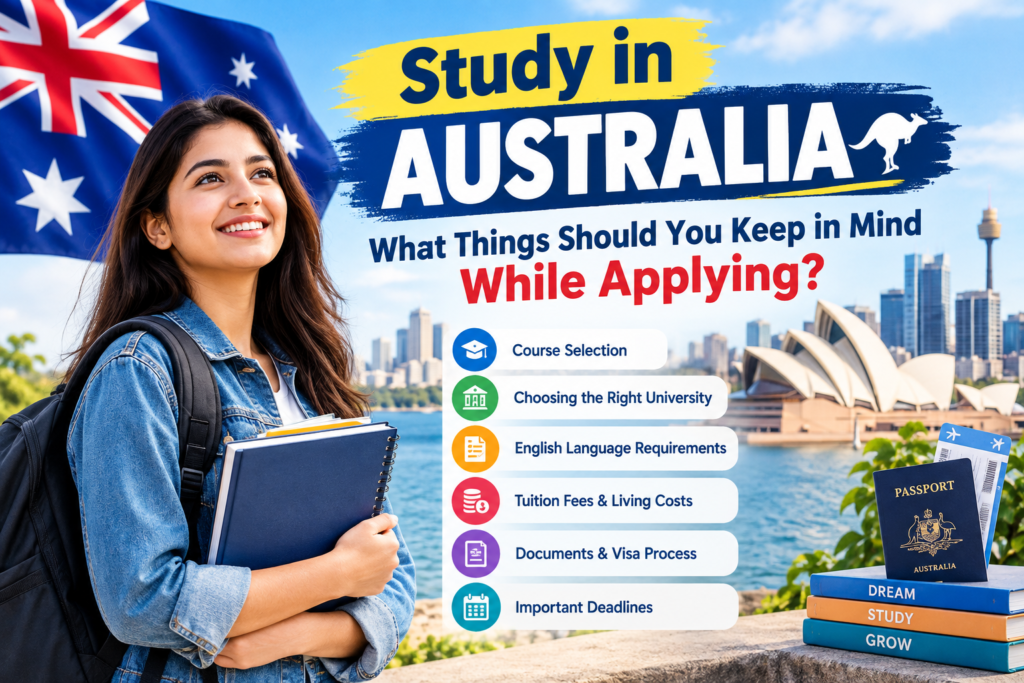
Studying in Australia is a popular choice among international students because of its globally recognized universities, diverse courses, multicultural environment, and practical learning opportunities. However, applying for an Australian student visa and choosing the right course and institution requires careful planning.
Before submitting your application, students should understand the admission requirements, English language requirements, tuition fees, living expenses, financial documents, and visa conditions. A well-planned application can help avoid unnecessary delays and improve your overall study-abroad experience.
This guide explains the important things you should keep in mind when planning to study in Australia.
Also Read More: F1 Visa Requirements 2026: What Indian Students Need to Know Before September 15
Why Study in Australia?
Australia has become a preferred destination for international students looking for quality education and a globally recognized qualification. Universities and other educational institutions offer courses across areas such as business, information technology, engineering, healthcare, management, hospitality, and many other fields.
Globally Recognized Education
Australian qualifications are widely recognized internationally. Students can choose from undergraduate, postgraduate, vocational, and research-based programs based on their academic background and career goals.
Wide Range of Courses
One major advantage of choosing Australia is the variety of available courses. Students should select a program that matches their previous education, interests and long-term career plans.
Multicultural Environment
Australia has students from many countries, allowing international students to experience different cultures and develop international connections.
Things to Check Before Applying to Study in Australia
Applying for an Australian study program involves several important steps. Students should not make their decision based only on the university’s name or course fees.
Also Read More: Kerala Plus Two Result 2026: Date Plus Time, Website, Right Process, and Other Updates
1. Choose the Right Course
The first step is to identify a course that matches your educational background and career objectives.
Before applying, check:
- Course duration
- Course curriculum
- Entry requirements
- Previous academic requirements
- English language requirements
- Future career relevance
- Available intakes
- Tuition fees
Check Course Eligibility
Every institution can have different entry requirements. Carefully review the official requirements before submitting an application.
2. Select the Right Institution
Australia offers many universities, colleges, and other registered education providers. Instead of selecting an institution solely because of its ranking, consider whether it offers the course and academic environment you need.
Check:
- Institution reputation
- Course accreditation
- Location
- Tuition fees
- Campus facilities
- Student support services
- Course structure
- Available intakes
3. Check English Language Requirements
English proficiency is an important part of many Australian education applications. Depending on the institution and course, students may be required to provide evidence of English language proficiency.
Commonly accepted tests can include:
- IELTS
- PTE Academic
- TOEFL iBT
- Other tests accepted by the relevant institution
Check the Exact Score Requirement
Do not assume that the same English score applies to every course. Requirements can differ between institutions and programs, and some courses may have higher language requirements.
4. Understand Tuition Fees
Before applying, calculate the total expected education cost rather than looking only at the first-year tuition fee.
Consider:
- Tuition fees
- Application charges, if applicable
- Student visa-related costs
- Overseas Student Health Cover (OSHC)
- Accommodation
- Food
- Transportation
- Study materials
- Personal expenses
Having a realistic budget can help you plan your finances more effectively.
5. Prepare Your Financial Documents
Students may need to demonstrate that they can meet relevant financial requirements and support their stay in Australia.
Depending on your circumstances, documentation may include evidence relating to:
- Available funds
- Income
- Sponsorship
- Education funding
- Other financial support
The exact requirements can change, so always check the latest official requirements before submitting your visa application.
6. Prepare Your Academic Documents
Keep all your academic documents organized before starting the application process.
These may include:
- Passport
- Academic certificates
- Mark sheets/transcripts
- English language test result
- Statement of Purpose or other required documents
- CV/resume, where applicable
- Work experience documents, if relevant
- Offer letter
- Confirmation of Enrolment (CoE), when issued
7. Understand the Student Visa Requirements
Admission to an Australian institution and receiving a student visa are separate processes. Getting an offer from an institution does not automatically guarantee visa approval.
Before applying, understand the current student visa requirements, required documents, and applicable conditions.
Genuine Student Requirement
Students should be prepared to provide information demonstrating that their study plans are genuine and consistent with their circumstances.
Your educational background, selected course, plans, and supporting information should make sense as a complete application.
8. Check the Intake and Deadlines
Australian institutions can have different intakes and application deadlines.
Start preparing early because you may need time for:
- Course research
- English language testing
- Document preparation
- University application
- Offer processing
- Acceptance and required payments
- CoE issuance
- Student visa application
Applying at the last minute can create unnecessary pressure.
Australia Study Costs vs. Other Popular Countries
Costs vary significantly depending on the university, course, city, and lifestyle. Therefore, the following table should be treated as a general planning comparison, not a fixed fee schedule.
| Factor | Australia | Canada | UK | USA |
|---|---|---|---|---|
| Education options | Universities, colleges & VET | Universities & colleges | Universities & colleges | Universities & colleges |
| Course duration | Varies by program | Varies by program | Many master’s programs can be shorter | Varies by program |
| English language | Commonly required | Commonly required | Commonly required | Commonly required |
| Living costs | City-dependent | City-dependent | City-dependent | City-dependent |
| Student visa | Required | Required | Required | Required |
| Work rights | Subject to current visa conditions | Subject to current visa conditions | Subject to current visa conditions | Subject to current visa conditions |
| Major consideration | Course, finances & visa requirements | Course & immigration requirements | Course, finances & visa rules | Admission, finances & visa requirements |
Important: Immigration rules, work conditions, financial requirements, and visa policies can change. Students should verify the latest requirements from official government and institution sources before applying.
Common Mistakes to Avoid When Applying to Study in Australia
Choosing a Course Without Research
Do not select a course simply because someone else recommended it. Your course should have a logical connection with your previous studies, skills and career plans.
Ignoring the Total Cost
Looking only at tuition fees can result in an unrealistic budget. Always consider living and other study-related expenses.
Submitting Incomplete Documents
Missing or inconsistent documents can delay an application. Prepare and check your documents carefully before submission.
Waiting Until the Last Minute
English tests, admission applications, and visa preparation can take time. Start the process well before your intended intake.
Providing Inconsistent Information
Information in your application, academic records, financial documents, and other supporting material should be accurate and consistent.
Relying on Outdated Information
Visa rules and requirements can change. Information found in an old YouTube video, social media post, or outdated blog may no longer be applicable.
How to Plan Your Study in Australia Application
A simple step-by-step approach can make the process easier.
Step 1: Define Your Study Goal
Decide what subject and qualification you want to pursue.
Step 2: Research Institutions
Compare institutions based on course content, eligibility, location, fees, and other relevant factors.
Step 3: Check Eligibility
Review academic and English language requirements.
Step 4: Prepare Documents
Keep your passport, academic records, English test results, and financial documentation ready.
Step 5: Apply to the Institution
Submit your application according to the institution’s requirements.
Step 6: Review Your Offer
Carefully read your offer letter and understand any conditions attached to it.
Step 7: Prepare for the Student Visa
After meeting the relevant admission requirements and receiving the necessary enrollment documentation, prepare your student visa application according to the latest rules.
Step 8: Prepare for Departure
Once your visa is granted, arrange accommodation, travel, and other essentials for your arrival in Australia.
Why Professional Guidance Can Help
The Australian study application process involves multiple stages, and requirements can vary depending on the student’s academic profile, selected course, and circumstances.
Professional guidance can help students:
- Understand course options
- Compare institutions
- Review eligibility
- Prepare documents
- Understand the application process
- Avoid common mistakes
- Plan their study journey
However, students should always verify important visa and immigration information through official Australian government sources.
Conclusion
Choosing to study in Australia can be an important step toward gaining an international education and developing your academic and professional skills. But a successful application requires more than simply selecting a university and submitting a form.
Students should carefully research their course and institution, understand English language and academic requirements, prepare their financial and academic documents, check current student visa requirements, and apply well before their intended intake.
Most importantly, make decisions based on your own academic profile, career objectives, and financial circumstances. Proper planning and accurate documentation can make the overall study-abroad journey much smoother.
Frequently Asked Questions
1. What should I check before applying to Study in Australia?
You should check the course eligibility, institution requirements, English language requirements, tuition fees, living expenses, intake dates, and current student visa requirements.
2. Is IELTS required to study in Australia?
English language requirements depend on the institution, course, and visa requirements applicable to your situation. IELTS is one commonly accepted English language test, but other tests may also be accepted.
3. How much does it cost to study in Australia?
The total cost depends on your course, institution, city, and lifestyle. You should consider tuition fees, accommodation, food, transportation, health insurance, and other expenses when preparing your budget.
4. Can I work while studying in Australia?
International students may have work rights subject to the conditions attached to their visa. Always check the current Australian visa conditions before making employment plans.
5. How early should I apply for Australia?
It is better to start the process several months before your intended intake so you have enough time for English testing, document preparation, admission processing, and visa preparation.
6. Which course is best to study in Australia?
There is no single best course for everyone. The right choice depends on your academic background, interests, career goals, eligibility and budget.
7. Can I apply for an Australian student visa after receiving admission?
Admission and visa applications are separate stages. After receiving the required enrollment documentation, you must meet the applicable student visa requirements and submit the visa application with the necessary supporting documents.
8. Should I take professional guidance for a study in Australia?
Professional guidance can be useful for understanding course options, eligibility, and application procedures. However, always verify current immigration requirements through official Australian government sources.