Canada Visa from Australia 2026 – Your Complete Application Guide
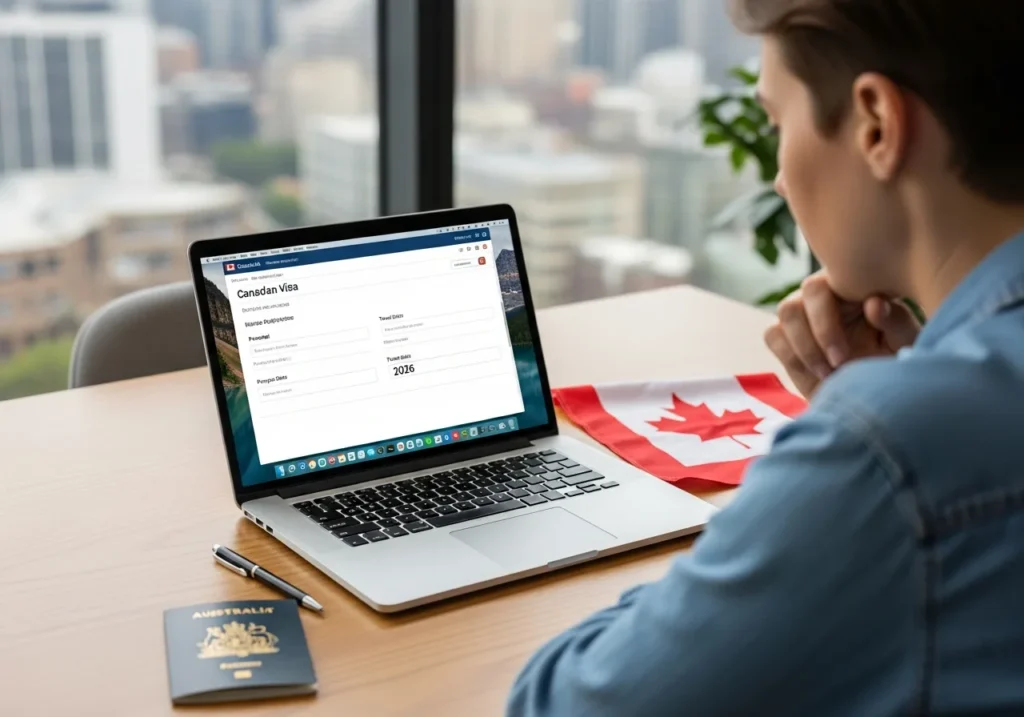
Are you dreaming of visiting, studying, or working in Canada? Whether you’re an Australian citizen planning a vacation to explore Canada’s stunning landscapes or a professional seeking international work experience, understanding the visa application process is essential. This comprehensive guide covers everything you need to know about obtaining a Canada visa from Australia 2026, including eligibility criteria, required documents, processing timelines, and insider tips for approval.
Australia and Canada maintain strong bilateral ties, and the visa pathways are well-established for Australian citizens. However, navigating the application process requires careful attention to detail and an understanding of current regulations. With recent immigration changes taking effect in 2026, staying informed is more important than ever. Whether you’re applying through the official IRCC (Immigration, Refugees and Citizenship Canada) portal or seeking expert guidance from trusted immigration consultants like Sunland Education and Australia immigration consultant Chandigarh, this guide will equip you with the knowledge to succeed.
Why does this matter? A well-prepared visa application significantly increases your chances of approval, saves time, and reduces stress. This guide combines expert insights with the latest 2026 regulations to help you navigate the process with confidence.
Section 1: What is a Canada Visa from Australia 2026?
A Canada visa from Australia 2026 is an official travel document that permits Australian citizens and residents to enter and stay in Canada for specific purposes. Unlike some countries that allow visa-free entry, most Australians require either an Electronic Travel Authorization (eTA) or a Temporary Resident Visa (TRV) to travel to Canada.
Understanding the Key Differences
Electronic Travel Authorization (eTA): Australian passport holders can often enter Canada visa-free by obtaining an eTA. This digital travel document is linked to your passport and costs just CAD $7 (approximately AUD $8). The eTA is valid for up to five years or until your passport expires, whichever comes first.
Temporary Resident Visa (TRV): Non-Australian citizens living in Australia, or those planning stays longer than six months, must apply for a traditional Australia visa or visitor visa. This document allows entries into Canada for tourism, business, or family visits.
Important Distinction: Australian passport holders may qualify for eTA, but if you’re a permanent resident or temporary resident of Australia, you may need a full Canada visa from Australia 2026 application instead.
Section 2: Types of Canadian Visas for Australians
Canada offers multiple visa pathways for Australians, each designed for specific purposes and circumstances.
Tourist/Visitor Visa (Temporary Resident Visa)
The most common pathway for Australian travelers, the visitor visa allows stays of up to six months per visit. Key features include:
- Multiple-entry visas valid for up to 10 years or until passport expiry
- No work authorization included
- Ideal for vacation, family visits, or short-term tourism
- Can lead to further immigration opportunities through study or work pathways
Pro Tip: This is perfect if you’re using a Canada visa from Australia 2026 primarily for sightseeing and exploration.
Work Permit (International Experience Canada – IEC)
For Australians aged 18–35, the International Experience Canada (IEC) program is a game-changer. This bilateral agreement allows young Australians to work and travel in Canada.
- Work for up to 12, 24, or 36 months depending on agreement
- Minimum wage: approximately CAD $17–18 per hour
- Full working rights across Canada
- Processing fee: approximately CAD $150–200
This is dramatically different from the tourist visa—you gain full employment authorization while exploring Canada. Many Australian professionals use this pathway to fund their Canadian adventure while gaining valuable international experience.
Study Permit
Australian students can pursue education in Canada with a study permit. Recent changes in 2026 have made this more accessible:
- No Provincial/Territorial Attestation Letter (PAL/TAL) required for graduate students
- Two-week processing for eligible graduate students at public institutions
- Full-time study authorization at recognized institutions
- Post-graduation work permit (PGWP) available upon completion
Permanent Residency (PR) Through Multiple Pathways
For those seeking long-term settlement:
- Express Entry System: Federal Skilled Worker Program (fastest PR pathway, 6–8 months)
- Provincial Nominee Programs (PNPs): Specific to provinces like Alberta, Ontario, British Columbia
- Employer-Sponsored Work Permits: Leading to eventual PR
Section 3: Eligibility Requirements for Australia to Canada Migration
Understanding whether you qualify is the first step in your Canada visa from Australia 2026 journey.
Basic Requirements for All Applicants
Before applying, ensure you meet these fundamental criteria:
✓ Valid Passport: Your Australian passport must be valid for the duration of your intended stay (preferably 6+ months validity remaining)
✓ Legal Status: You must have legal status in Australia (citizen, permanent resident, or valid temporary visa holder)
✓ No Criminal Record: You must have no criminal or immigration-related convictions
✓ Health Requirements: You may need to undergo medical examination for longer-stay visas
✓ Genuine Intent: You must demonstrate a genuine intention to return to Australia after your stay
Specific Eligibility by Visa Type
For Tourist/Visitor Visa: – Age: No minimum or maximum age restriction – Financial stability: Ability to cover travel, accommodation, and daily expenses – Ties to Australia: Employment, property ownership, family, or business – Travel history: Previous international travel strengthens your application – Strong travel purpose: Clear itinerary demonstrating why you want to visit Canada
For Work Permit (IEC): – Age: Between 18–35 years (inclusive) at time of application – Nationality: Valid Australian citizenship – Funds: Minimum CAD $2,500 (approximately AUD $2,800) proof of funds – Health insurance: May be required by employer – No criminal history related to immigration
For Study Permit: – Acceptance letter from a Designated Learning Institution (DLI) – Proof of financial support: Approximately CAD $20,000–25,000 per year – Ties to home country: Demonstrated intention to return to Australia – English/French proficiency: May be required depending on institution – Academic eligibility: Meeting institution-specific requirements
Section 4: Complete Document Checklist for Australia Visa Applications
Proper documentation is critical. Many applications are delayed or rejected due to incomplete or unclear documentation.
Personal Identification Documents
|
Document
|
Requirement
|
Notes
|
|
Valid Passport
|
Must be valid throughout stay
|
Original + color photocopy
|
|
Passport Photos
|
Typically 2–4 recent photos
|
35mm × 45mm, white background
|
|
Birth Certificate
|
Supporting document
|
Notarized copy acceptable
|
|
Marriage Certificate (if applicable)
|
For spouse sponsorship
|
Original + certified translation
|
|
Divorce/Annulment Decree (if applicable)
|
If previously married
|
Certified copy required
|
Financial Documentation
Demonstrating sufficient funds is non-negotiable for Canada visa from Australia 2026 approvals.
- Bank statements: Last 6 months (clear, original copies)
- Salary slips: Recent 3 payslips from current employer
- Tax returns: Last 2 years of Australian Tax Office (ATO) documentation
- Employment letter: Confirming position, salary, and leave approval
- Business proof: If self-employed, business registration + financial statements
- Sponsorship letter: If someone is funding your trip, their financial proof + declaration
Key Insight: Officers want to see consistent, legitimate income sources. Any sudden deposits or irregular transfers raise red flags.
Employment & Study Proof
- Employment contract or letter from employer
- Leave approval letter confirming time off granted
- Student ID card or enrollment letter (for students)
- Admission letter (for future studies)
- Professional credentials or certifications (if applicable)
Travel Documents
- Flight bookings: Dummy flights are acceptable; actual booking recommended
- Hotel reservations: Bookings through established platforms (Booking.com, Airbnb)
- Travel itinerary: Detailed day-by-day plan showing purpose and locations
- Return/onward ticket: Proof of intention to leave Canada
- Travel insurance: Optional but recommended (shows preparedness)
Additional Critical Documents
- Letter of explanation: Clear, concise cover letter (200–300 words) explaining your travel purpose
- Invitation letter: If visiting family/friends in Canada (personal letter + Canadian host’s documentation)
- Proof of ties to Australia: Lease agreement, property ownership, business documentation, family relationships
- Previous visas: Copies of past Australia visa documents, stamps, and travel history
- Medical examination results: For longer-stay visas (arranged through approved panel physicians)
Translation Requirements
All non-English documents must be translated by a certified translator. Submit both original and certified English translation.
Section 5: Step-by-Step Canada Visa from Australia Application Process
The application journey is straightforward when broken into clear steps.
Step 1: Determine Your Visa Type & Eligibility
Action: Answer the official questions on Canada.ca to determine whether you need an eTA, visitor visa, work permit, or study permit.
Why this matters: Applying for the wrong visa type wastes time and money. Australians aged 18–35 with a passport should consider IEC work permits instead of tourist visas.
Timeline: 10–15 minutes
Step 2: Gather & Organize All Documents
This is where most applicants struggle. Create a physical folder with all documents in the order specified by IRCC.
Checklist: – Personal documents section – Financial documents section
– Employment/study documents section – Travel documents section – Supporting documents section
Pro Tip: Use the document uploading guidelines from the official IRCC portal. Ensure PDF files are clear, readable, and properly named (e.g., “2024-Bank-Statement-John-Smith.pdf”).
Timeline: 1–2 weeks (depends on document availability)
Step 3: Create Your IRCC Online Account
Action: Visit the official Immigration, Refugees and Citizenship Canada (IRCC) website and create a secure account using:
- Valid email address
- Username and secure password
- Two-factor authentication (recommended)
Benefits of Online Application: – Real-time application status tracking – Ability to add documents at any time – Faster processing (typically 15–30 working days) – Official confirmation of submission
Timeline: 5–10 minutes
Step 4: Complete the Visitor Visa Application Form (IMM 1419)
This is your official application form. Complete it thoroughly and honestly.
Key Sections: 1. Personal information (name, date of birth, contact details) 2. Travel history (all countries visited in last 5 years) 3. Employment history (last 5 years of work experience) 4. Family background (spouse, dependent children, parents) 5. Purpose of visit (clear, specific explanation) 6. Ties to Australia (why you will return) 7. Criminal history (if applicable)
Critical Advice: Never exaggerate qualifications or hide information. Canadian immigration officers have access to international databases and cross-reference information extensively.
Timeline: 30–45 minutes
Step 5: Upload All Documents to IRCC Portal
Action: Systematically upload each document in the required format (typically PDF, PNG, or JPG).
Upload Guidelines: – File size: Maximum 4 MB per file (compress if necessary) – Resolution: Minimum 72 DPI (higher is better) – Language: English or French (certified translation required for other languages) – Naming convention: Clear, descriptive file names
Common Upload Mistakes to Avoid: – Uploading blurry or partial documents – Using generic file names (“Document1.pdf”) – Uploading wrong file formats – Exceeding file size limits
Timeline: 1–2 hours
Step 6: Pay Your Canada Visa Fees
Fees are non-refundable, regardless of approval outcome.
Current 2026 Fees: – Visitor visa application: CAD 100 (approximately AUD $112) – Biometrics collection (if required): CAD 85 (approximately AUD $95) – Service fees (if using authorized representatives): Variable
Payment Methods: – Credit card (Visa, MasterCard, American Express) – Debit card – Bank transfer
Important Note: Pay fees only through the official IRCC portal to avoid fraudulent charges. IRCC never requests payment through email or external links.
Timeline: 5–10 minutes
Step 7: Schedule Biometrics Appointment (If Required)
Not all applicants require biometrics, but most will.
Where to Give Biometrics: – Canada Visa Application Centre (VAC) locations in Australian capital cities (Sydney, Melbourne, Brisbane, Perth, Adelaide) – Appointment booking required in advance – Bring valid ID and proof of payment
What’s Involved: – Fingerprint scanning (digital) – Photograph collection (digital) – Duration: 15–30 minutes – Cost: Already included in application fees
Valid Period: Biometrics remain valid for 10 years if you’ve provided them previously for any Canadian visa.
Timeline: Book 2–4 weeks in advance; appointment scheduling: 1–2 hours
Step 8: Monitor Your Application & Respond to Requests
Action: Regularly check your IRCC account for updates.
Possible Outcomes: – Approval: Visa issued digitally; instructions for arrival provided – Refusal: Detailed explanation of decision; appeal options outlined – Additional Information Requested: Respond within specified timeframe (usually 15–30 days) – Medical Examination Required: Arranged through approved physician network
Communication: IRCC communicates exclusively through your online account and email. Never ignore official requests.
Timeline: Varies; typically 15–30 working days from submission
Step 9: Prepare for Arrival in Canada
Once approved, prepare for your Canadian adventure.
Pre-Arrival Tasks: – Arrange accommodation – Book flights – Purchase travel insurance – Notify your bank of travel dates – Arrange Canadian phone number/SIM card – Research areas you’ll visit
At the Border: – Present valid passport, visa/eTA approval, and proof of funds – Be prepared to answer questions about your trip purpose – Show return flight ticket – Declare any restricted items
Section 6: Processing Times, Fees & Immi Australia Updates for 2026
Understanding current timelines and recent changes is essential for planning your move.
Official Processing Times (January 2026)
|
Visa Type
|
Standard Processing
|
Expedited Option
|
Notes
|
|
Visitor Visa (Tourist)
|
15–30 working days
|
Not available
|
May extend during peak seasons
|
|
IEC Work Permit
|
20–35 working days
|
Not typically available
|
Faster if all documents submitted
|
|
Study Permit (Graduate)
|
2 weeks
|
Express processing
|
For public institution graduate students
|
|
Study Permit (Undergraduate)
|
4–6 weeks
|
Not available
|
Standard pathway
|
Pro Tip for 2026: Apply early to avoid delays. Peak periods are January–March and September–October when many students and workers apply.
Updated Canada Immigration Changes (January 1, 2026)
Canada’s immigration system saw significant reforms effective January 1, 2026:
For Graduate Students: – Removed Provincial/Territorial Attestation Letter (PAL/TAL) requirement – Two-week processing now available for eligible graduate students – Graduate students no longer count against national study-permit caps – Massive advantage for Master’s and PhD students from Australia
For Work Permits: – In-Canada applicants must hold valid work permit at time of application (maintained status no longer qualifies) – Alberta’s Rural Renewal Stream now requires TEER 4–5 applicants to be physically resident in the province – Endorsement letters valid for only 12 months (reduced from previous terms) – Focus shifting toward skilled professionals rather than lower-skilled workers
Employer Obligations: – Employers banned from demanding “Canadian work experience” in job postings – AI screening tools must be disclosed in job advertisements – Employers have 6 months to audit postings or face fines
Positive Changes for Australians: – Ontario’s new “As-of-Right” framework allows certified professionals from other provinces to work in Ontario within 10 days – Faster mobility for skilled trades, healthcare, and engineering professionals – Express Entry continues to process applications within 6–8 months
Complete Fee Structure for 2026
|
Service
|
2026 Fee (CAD)
|
Equivalent AUD
|
Notes
|
|
Visitor Visa Application
|
100
|
~112
|
Processing fee
|
|
Biometrics Collection
|
85
|
~95
|
Most applicants required
|
|
IEC Work Permit
|
~150–200
|
~170–225
|
Varies by country agreement
|
|
Study Permit
|
150
|
~169
|
Standard processing
|
|
Express Entry (PR)
|
550
|
~620
|
Processing fee + biometrics
|
|
eTA
|
7
|
~8
|
Digital authorization only
|
Payment Security: Always pay through official IRCC channels. Fraudulent payment pages are common; verify URLs carefully.
Key Immi Australia & Australian Government Updates
Australian Government’s Immi Australia** Platform Updates (2026):**
The Australian Department of Home Affairs maintains the “Immi Australia” system for Australian citizens abroad:
- Reciprocal Recognition: Australia’s migration points system is increasingly recognized by Canadian employers
- Bilateral Skills Recognition: More Australian qualifications automatically recognized in Canada, especially in healthcare, engineering, trades
- Travel Advisories: Real-time updates on Canadian travel safety and requirements available on Smartraveller website
- Emergency Assistance: Australian embassy in Ottawa provides support for citizens abroad
Why This Matters: Understanding reciprocal arrangements helps you leverage your Australian qualifications when applying for Canadian work permits.
Section 7: Why Expert Australia Immigration Consultant Chandigarh Services Matter
While DIY applications are possible, professional guidance dramatically increases success rates.
The Value of Expert Australia Immigration Consultant Chandigarh Services
Sunland Education and Australia immigration consultant Chandigarh specialists understand the nuances that separate approved from rejected applications.
Key Benefits:
- Risk Assessment & Pre-Application Review – Professional consultants evaluate your specific situation – Identify weaknesses before formal application – Suggest remedial steps (e.g., additional savings, stronger ties documentation) – Save money by preventing rejections
- Document Preparation & Organization – Ensure all documents meet official specifications – Proper translation of non-English documents – Strategic ordering for maximum impact – Notarization and certification where required
- Cover Letter & Statement of Purpose Drafting – Compelling narratives that align with visa officer expectations – Clear articulation of genuine travel/work/study intentions – Addressing potential concerns proactively – Professional tone reflecting genuine purpose
- Application Submission & Tracking – Ensure all forms completed correctly and accurately – Monitor application status throughout process – Respond promptly to information requests – Coordinate biometrics appointments
- Interview Preparation (if required) – Practice common questions – Develop compelling responses – Confidence building – Understanding visa officer expectations
Why Australians Choose Sunland Education and Australia Immigration Consultant Chandigarh
Established Expertise: Sunland Education and Australia immigration consultant Chandigarh has been serving immigration clients for over 23 years, with comprehensive understanding of:
- Australia-Canada immigration pathways
- Recent 2026 regulatory changes
- Sector-specific requirements (healthcare, IT, trades)
- Regional variation across Canadian provinces
Comprehensive Services: – Canada visa applications (tourist, work, study, PR) – Australia visa processing for returning Australians – IELTS, PTE, and OET exam coaching – University admission assistance – Post-landing support in Canada
Track Record: – Thousands of successful applications – High approval rates across all visa categories – Client testimonials emphasizing professionalism – Recognition as one of Chandigarh’s leading consultancies
Why Australian Applicants Benefit: While you’re based in Australia, Sunland Education and Australia immigration consultant Chandigarh offers:
- Affordable consultation fees (significantly cheaper than Australian-based agencies)
- Flexible online/phone support (timezone-friendly for Australian clients)
- Detailed knowledge of Australian credential recognition in Canada
- Understanding of Australian travel patterns and visa requirements
Section 8: Common Mistakes & How to Avoid Them
Learning from others’ errors can save your application.
Mistake #1: Weak or Unclear Purpose of Visit
The Problem: Vague explanations like “I want to visit Canada” don’t convince visa officers.
What Officers Are Looking For: – Specific cities and attractions you’ll visit – Why Canada interests you specifically (not just any country) – How the trip fits your overall life goals – Realistic budget aligned with stated itinerary
The Fix: Write detailed travel itineraries including: – Specific dates and cities – Booking confirmations for hotels, flights – Planned activities with brief explanations – Cost breakdown showing realistic budget
Example (Weak): “I want to visit Canada for two weeks and see nature.”
Example (Strong): “I will spend 10 days in Banff and Lake Louise, visiting from July 15–25, 2026. I’ve booked a 4-star hotel (CAD $150/night), and plan to hike Moraine Lake, Lake Louise, and Johnston Canyon. I’ll then spend 4 days in Toronto visiting the CN Tower, Niagara Falls, and attending my cousin’s birthday celebration (invitation letter enclosed). Total budget: AUD $8,500.”
Mistake #2: Insufficient Financial Documentation
The Problem: “I have enough money” without proof isn’t credible.
What Officers Need: – 6 months of bank statements showing consistent balance – Recent employment letter confirming salary – Explanation of any large deposits or transfers – Proof funds aren’t borrowed (avoid last-minute deposits)
The Fix: – Maintain steady savings for 6+ months before applying – Ensure bank statements show your name clearly – Request official statements from your bank (no screenshots) – Document source of funds if inherited or gifted
Red Flag Example: Applicant has AUD $2,000 in account, then deposits AUD $10,000 one week before application. Visa officer suspects borrowed money for application purposes only.
Mistake #3: Weak Ties to Australia
The Problem: Visa officers fear you might stay in Canada illegally.
What Demonstrates Strong Ties: – Full-time employment (with leave approval) – Property ownership or long-term lease – Family in Australia (spouse, children, parents) – Active business or professional practice – Previous travel history showing return to Australia
The Fix: – Provide employment letter explicitly mentioning your return date – Include property ownership documents or lease agreements – Provide family documentation (marriage certificate, children’s birth certificates) – Highlight previous international travel with return proof – Include testimonials from employer about your reliability
Strong Tie Example: “I’m employed full-time as a software engineer with XYZ Company, earning AUD $95,000 annually. I own property in Brisbane worth AUD $450,000. My spouse and two children depend on my employment income. I have traveled to USA (2023) and UK (2022), returning to Australia both times. I have approved leave for my Canadian visit from [dates].”
Mistake #4: Incomplete or Incorrect Document Formatting
The Problem: Upload errors cause application rejection or delays.
Common Errors: – Documents uploaded upside down or sideways – Blurry photographs (illegible text) – Multiple documents combined into single file – Wrong file format (BMP instead of PDF) – File size exceeding limits (>4MB)
The Fix: – Use a smartphone app (CamScanner, Adobe Scan) to scan documents professionally – Ensure proper orientation (test on computer before uploading) – Split multi-page documents appropriately – Convert all files to PDF format – Verify file size before uploading
Technical Check: Open each uploaded file on different device to ensure quality and readability.
Mistake #5: Providing False or Exaggerated Information
The Problem: Canadian immigration has extensive verification systems.
What Happens: – Database cross-referencing with Australian tax office, employment records – Verification calls to employers and educational institutions – Travel record checks through international systems – Rejection and possible bans on future applications
The Fix: – Provide only truthful information – Never fabricate documents – Explain gaps honestly (e.g., “I was unemployed due to health reasons” with medical documentation) – Disclose criminal history proactively (better than discovered later) – Use certified translators for official documents
Serious Consequence: Dishonesty can result in permanent ban from Canada, not just visa rejection.
Mistake #6: Missing Translation of Non-English Documents
The Problem: IRCC won’t process documents in languages other than English/French.
The Fix: – Use only IRCC-certified translators – Submit both original and certified English translation – Include translator’s declaration of accuracy – Pay certified translation fees (typically AUD $30–50 per document)
Cost-Saving Tip: Birth certificates and basic government documents often have English versions available directly from issuing authorities.
Section 9: FAQ: Canada Visa from Australia 2026
Q1: Do all Australian passport holders need a Canada visa from Australia 2026?
No, it depends on your circumstances. Australian citizens can often enter Canada visa-free with an eTA (Electronic Travel Authorization)—a simple digital document costing just CAD $7. However, if you’re a non-citizen living in Australia or planning stays longer than six months, you’ll need a full Australia visa application.
Q2: What’s the difference between an eTA and a Canada visa from Australia 2026?
An eTA is a digital authorization for short-term visits (up to 6 months) by Australian passport holders entering by air. It’s quick (usually approved within minutes) and costs CAD $7. A Canada visa is a formal visa for longer stays, work, study, or for non-Australian citizens living in Australia. eTA is faster and cheaper for short tourism; visa is necessary for extended stays.
Q3: How long does a Canada visa from Australia 2026** take to process?**
Standard processing is 15–30 working days for visitor visas. However, processing times can extend during peak seasons (January–March, September–October). IEC work permits typically take 20–35 working days. New in 2026: graduate students at public institutions can get study permits in just 2 weeks.
Q4: What’s the minimum bank balance required for a Canada visa from Australia 2026?
There’s no fixed minimum, but you should show enough funds to cover: – Flight tickets: AUD $1,500–$3,000 – Accommodation: AUD $100–$200/night for stay duration – Daily expenses: AUD $100–$150/day – Return ticket: Already included above
For a typical 3-week visit, budget AUD 8,500–12,000 in bank statements.
Q5: Can I work in Canada on a tourist Australia visa?
No. A tourist Canada visa from Australia 2026 does not include work authorization. If you work illegally, you risk: – Immediate deportation – Lifetime ban from Canada – Criminal record complications for future immigration to any country
If you want to work, apply for an International Experience Canada (IEC) work permit instead (available for ages 18–35).
Q6: Is biometrics mandatory for Canada visa from Australia 2026 applications?
Yes, most applicants must provide biometrics (fingerprints and photograph). However, you’re exempted if you’ve provided biometrics for a Canadian visa in the last 10 years. Biometrics are collected at Canada Visa Application Centres (VAC) in major Australian cities.
Q7: Can I apply for multiple Canada visas from Australia 2026 simultaneously?
No, you can’t have overlapping applications for the same visa type. However, you can apply for different visa types (e.g., apply for both study permit and work permit if eligible, choosing one to activate). It’s strategic to prepare one strong application rather than multiple weaker ones.
Q8: What happens if my Canada visa from Australia 2026 application is rejected?
You receive a detailed written explanation including: – Specific reasons for refusal – Which documents were insufficient – Appeal options and timelines – Whether you can reapply
Most rejections are due to insufficient financial documentation or weak travel purpose. You can reapply after addressing the stated issues. Many applicants succeed on second attempts after expert guidance.
Q9: How does the new January 2026 Canadian immigration change affect Australian applicants?
Major impacts: – Graduate students: Much faster processing (2 weeks vs. 4–6 weeks) – Work permit applicants: Need valid work permit status in Canada (no “maintained status” option) – Skilled professionals: Easier provincial mobility in Ontario – Employers: Can’t demand “Canadian work experience” in job postings—huge advantage for Australian applicants
Overall, 2026 changes favor skilled professionals and graduate students from Australia.
Q10: Should I hire a Canada visa from Australia consultant, or apply myself?
Apply yourself if: – You’re a native English speaker – Your situation is straightforward (tourist visit, strong ties) – You have time to research thoroughly – You’re comfortable with complex paperwork
Hire an expert like Sunland Education and Australia immigration consultant Chandigarh if Your situation is complex (change of status, previous visa refusals) – You want maximum approval chances (worth the investment) – You lack time or confidence in English – You’re applying for study or work permits (higher stakes)
Reality Check: Professional consultation fees (AUD $400–$800) are minimal compared to potential refusal costs (re-application fees, wasted time, missed opportunities).
Conclusion
Navigating a Canada visa from Australia 2026 requires careful planning, accurate documentation, and understanding of current regulations. Whether you’re applying for a quick eTA to explore Canada’s natural wonders, an IEC work permit to fund your adventure, or a study permit to advance your education, the process is achievable with proper preparation.
The key takeaway: Start early, gather comprehensive documentation, be honest in your application, and don’t hesitate to seek expert guidance. Recent changes effective January 2026 have made certain pathways—particularly for graduate students and skilled professionals — faster and more accessible than ever. Australia and Canada share strong ties, and your application success is entirely within reach.
If you’re based in Australia and considering a Canada visa from Australia 2026, remember that professional guidance from trusted immigration consultants like Sunland Education and Australia immigration consultant Chandigarh can make the difference between approval and disappointment. With over 23 years of experience serving clients globally, they understand both Australian circumstances and Canadian requirements intimately.
Your Canadian dream is achievable. Start your application today.
Call to Action
Are you ready to begin your Canada visa from Australia 2026 journey? Whether you’re exploring options or ready to apply, we’d love to hear from you. Share your visa questions in the comments below—our team of immigration experts and community members will provide insights. Have you already applied? Share your experience and tips to help fellow Australian applicants navigate this exciting process successfully. Don’t keep this knowledge to yourself—tag a friend planning their Canadian adventure and help them succeed. Your shared experiences and questions in the comments section will help others achieve their dreams.
Contact Sunland Education and Australia Immigration Consultant Chandigarh for professional guidance on your Canada visa application. With 23+ years of experience, they’ll help you get it right the first time.
About the Author
This comprehensive guide was developed by immigration experts with 20+ years of experience in Canadian and Australian visa processes. Information current as of January 2026 and based on official IRCC regulations and recent bilateral immigration updates.